Dongchu Corporate Philosophy: The Origin of Partner and Family Happiness




This is the 1.0 release of Dongchu's corporate philosophy, which will continue to be refined and expanded during its operation.
Preface:
The Ignorant Heart and the Phase of Rebirth:
On 2018/3/19, Hunan Dongchu Food Technology Co., Ltd. was founded. This 3/19 marks both the birth date of my business license and my own birthday. At the start of this venture, Dongchu was a second attempt for me; my first startup in Shanghai had failed. I even wrote a suicide note and planned to burn down one of the shareholders' homes in Shanghai. However, Mr. Luo talked me out of it. Because I was young then, he encouraged me to start over and warned me not to make mistakes by letting personal grudges cloud my judgment.
Later, heeding advice, I returned to Changsha for a second startup. At that time, I had nothing—no money and no team. I was the lone commander starting my second venture. The only asset I had was over 18 years of industry resources.
In the first year, 2018 achieved sales of over 1500 million yuan. From the end of 2017 to April 2018, a four-month period was spent in constant legal disputes and conflicts with shareholders of the Shanghai company. This intense experience forced me to deeply reflect every day for more than 4 months on fundamental questions: Why start a business? Why do people live? What is the purpose of an enterprise? I also identified 40 potential ways a business can fail. Having witnessed numerous business failures—both others' and my own—in Shanghai's competitive market over the past 5 years, I realized that the entire imported beef supply chain is like slicing an apple or navigating Huawei's trademark strategy: each segment offers profit, employs many people, and exists in a highly competitive red ocean. The highest level of business is education; the highest level of education is business. Because I started with nothing, I chose this difficult but correct path: reimagining the entire imported beef supply chain from an educational perspective. Over the next 15 years—starting like kindergarten and culminating like university admission, spanning 15 years—I plan to open 100 Dongchu Beef Lifestyle Stores across 100 counties in Hunan Province.
Next, I realized that running a business is about managing people and human nature. Are you selling products or building relationships with people? Both have lifecycles: products last from a few days to over a decade, while people's involvement spans at least 60 years. However, understanding how to manage hearts and minds isn't easy—that's why my first venture failed completely.
On day one of founding my startup, I sought guidance from three mentors: Chairman Mao, religious teachers, and Kazuo Inamori. Chairman Mao built the Party and nation from nothing; I deeply admire him and am a devoted reader of his works, which have given me endless strength. For over 3,000 years, religion has remained vibrant and enduring. As the sutras teach, "Delve into the vast treasury of teachings, and wisdom will be like the ocean." Truly mastering Buddhist principles grants wisdom as boundless as the sea and the void. Over 7 years of entrepreneurship, I've completed 4地藏 Seven retreats at home, and my collection of religious books exceeds 200. Additionally, Kazuo Inamori has accompanied my growth throughout this journey. He founded 3 Fortune 500 companies and authored nearly 60 books, personally guiding me on how to start and run a business. On day one of my entrepreneurial journey, I established our corporate culture by fully adopting Kyocera's model for practice. In 12 of year 2018, upon learning about the Hunan Kazuo Inamori Study Group, I immediately joined to immerse myself in its learning environment.
Rise and fall of the Inflated Heart:
Started in 2018 with annual sales of ¥1500, we enjoyed a brief period of sustained growth for 4 years. However, as arrogance took hold and I began to believe I could do anything, greed and dissatisfaction grew unchecked, leading to a series of poor decisions. I failed to fully apply the practical knowledge I had learned. Recently, sales have declined for 3 consecutive years, and profits have remained negative for 2 years. Unable to turn things around due to continuous losses, we were forced to reduce staff, resulting in fewer team members. Today, sales continue to drop, business performance worsens, and the industry remains sluggish. At our lowest point, unsure of the future direction, we chose to survive first by adopting an asset-light model, then focus on finding new paths and strategies.
Rebirth and Appreciation Phase for Ms. Wu Qun of Shenyang Zhuoting Tax & Finance
Due to anxiety, especially in 2024, the entire beef industry hit a 30-year low. In 2025, the pork sector also faced its first major reshuffle in over a decade. Although I've always loved learning and actively seek out opportunities to learn outside—often multiple times a year—I lacked clear direction. Since joining Kazoku (盛和塾) at the end of 2018, nearly 7 years ago, I've read extensively, watched countless videos, attended various group study sessions, and visited national conferences 6 times. Yet, honestly, I learned more and gained greater insights during these past 2 days at Shenyang Zhuoting Finance & Tax than from all that time combined. At the end of 12, our study group announced a trip to Shenyang Zhuoting Finance & Tax. With business performance deteriorating steadily and hitting rock bottom, and with no clear direction within my industry, I joined them. Just those two days gave me a renewed source of energy and vitality. Over the nearly 7 years at Kazoku, I may have collected some pearls each year, but they remained scattered and dull in every corner. These two days allowed me to thread all my previous knowledge together with one central principle: fully emulate Shenyang Zhuoting Finance & Tax by practicing what we preach and preaching what we practice. Every philosophical tenet must be converted into specific numerical targets, and every numerical target must be translated back into its corresponding philosophical meaning. From the perspective of partner happiness—specifically through value creation at an 40% rate—we distribute wages and bonuses to ensure employees achieve material wealth. We convert every task this month into concrete numbers and simultaneously map them to specific philosophical principles. Numbers reflect progress in philosophical practice, while the depth of philosophical practice is reflected in the numbers. Daily discussion of philosophy becomes daily discussion of numbers, and vice versa—this is the continuous process of shared ownership. This aligns perfectly with Mr. Kazuo Inamori's Three Management Essentials: 1. Earn your employees' trust, admiration, and devotion through your personal character. 2. Rigorously monitor monthly sales and expenses to implement data-driven management. 3. Ensure employees share the correct philosophy.
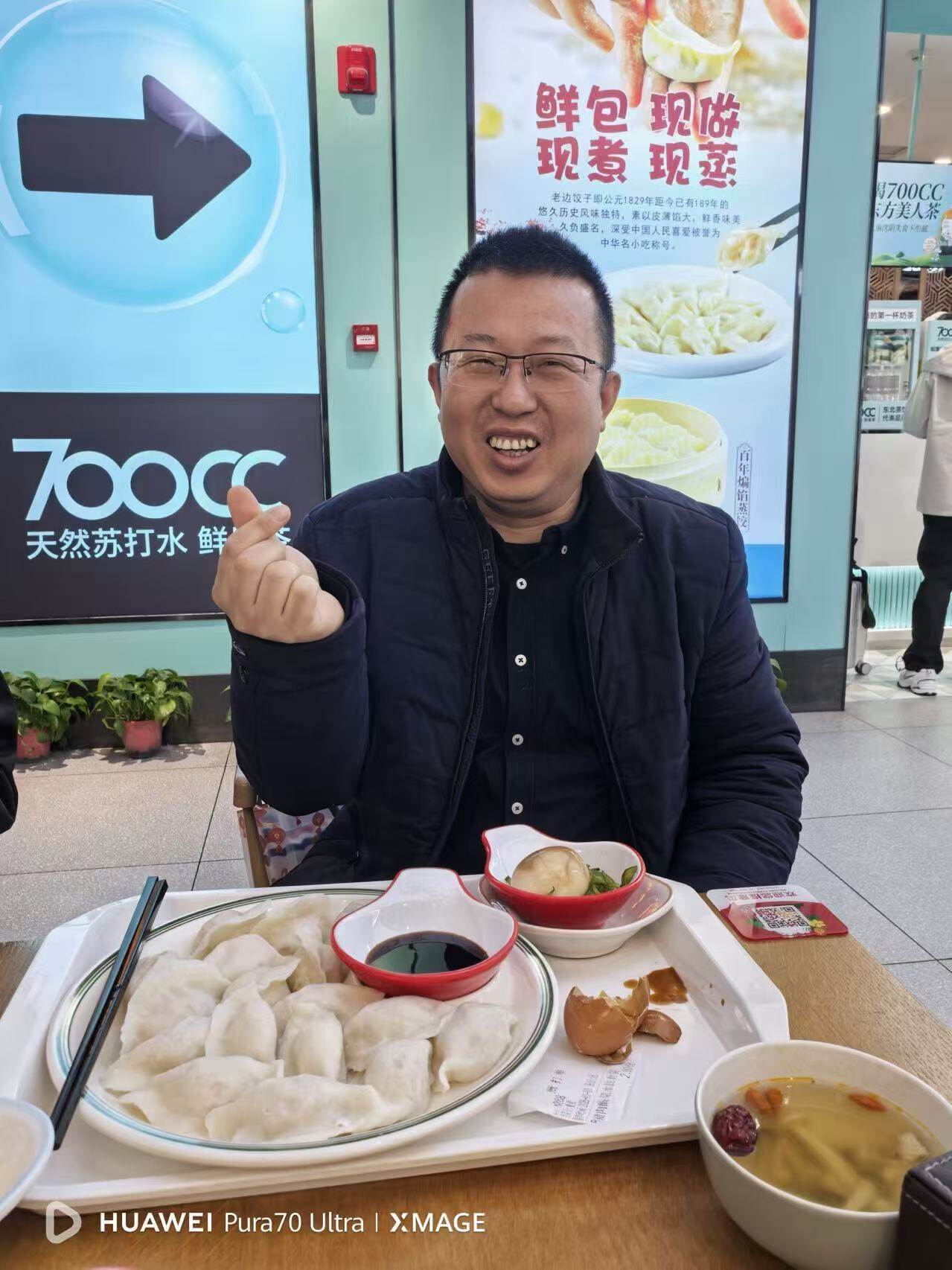
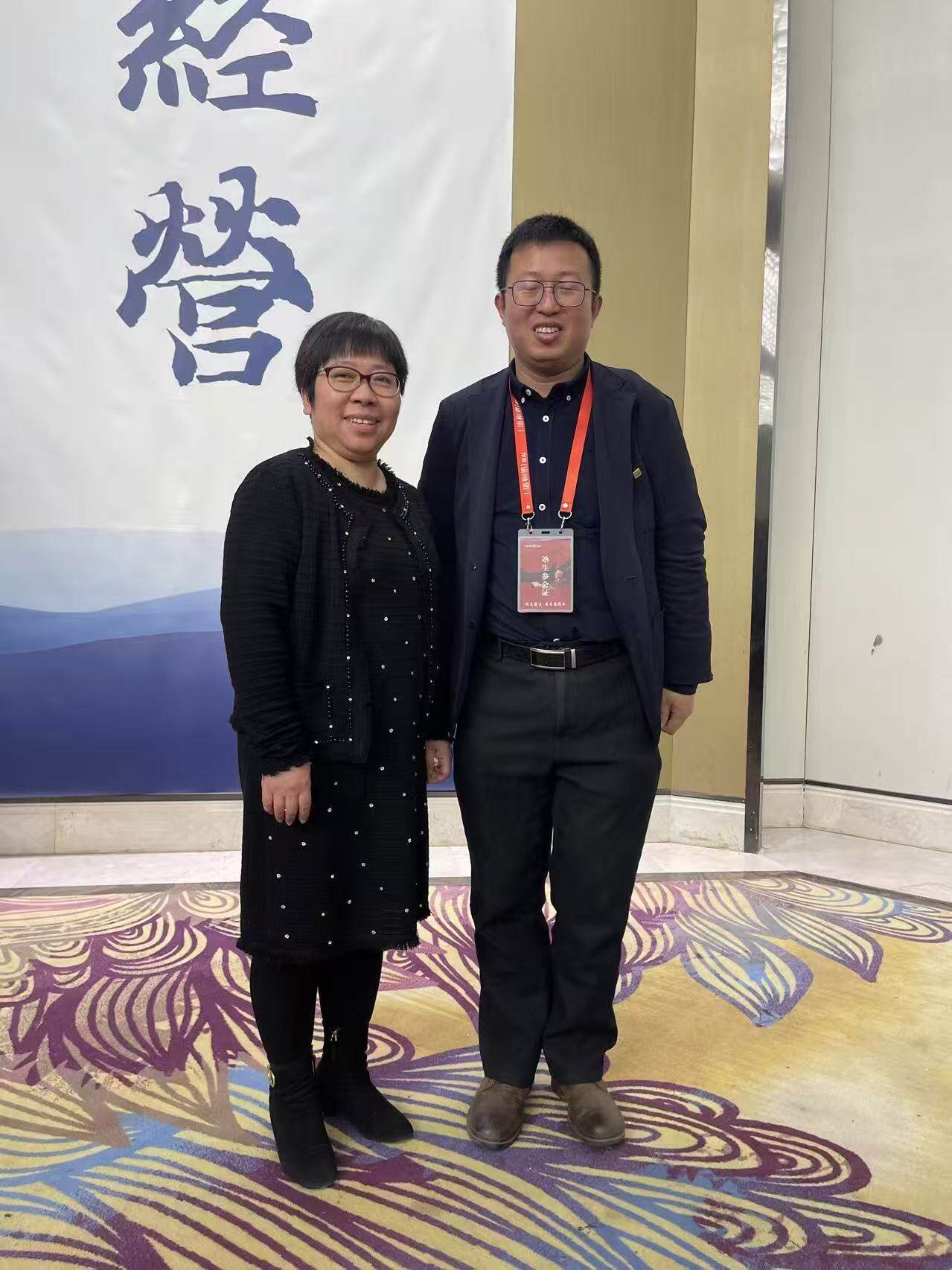
I first met Sister Wu Qun at the end of 2020. We took a photo together; my eyes were closed. Over the next 5 years of entrepreneurship, I didn't follow her advice or use digital tools to run my business well. The second time I met Sister Wu Qun was on 12, 30, 2025. We took another photo together; this time, my eyes were open. I will use digital tools to run my business well, follow her guidance, and become someone like Sister Wu Qun. Personal renewal and business renewal are essential.
During operations, I often ask myself: What is the most critical factor for Dongchu's long-term, sustainable growth? What are the prerequisites? How can operators, head chefs, and staff make sound decisions? And what specific actions should they take?
This manual is based on the "Kyocera Philosophy" handbook, adapted to the current situation and short-term strategic goals of Dongchu, for the learning of Dongchu partners. Each item in this manual will be explained in detail.
This year marks the 8th anniversary of Dongchu Company's founding and a pivotal moment of complete renewal. I hope more partners and their families will apply these values to their lives, careers, and businesses. By caring for our employees, we aim to influence more enterprises and contribute to societal progress. I believe this milestone distinguishes Dongchu Company from its past as it continues to grow.
As a future leader in the industry, Dongchu is committed to its mission and responsibility. While driving our own growth, we will continue to strive for social impact. We connect integrity with data-driven futures, harmony with value-based operations, innovation with smart technology, and human well-being with compassion.
Finally, we hope this booklet helps you and your loved ones lead a fulfilling life and achieve meaningful results. Let us continue to learn and practice the Kyosei philosophy and practical wisdom. Your work will be vibrant, your career will flourish rapidly, and your life will shine brilliantly!
Wen Yaojian, Hunan Dongchu Food Technology Co., Ltd.
2026, 1
Dongchu Enterprise Mission: To enrich our partners' and families' lives materially while nurturing their spiritual well-being. We operate with love, create for the sake of love, build a happy Dongchu, and contribute to our local community through our business activities.
Dongchu Corporate Philosophy: The Origin of Partner and Family Happiness
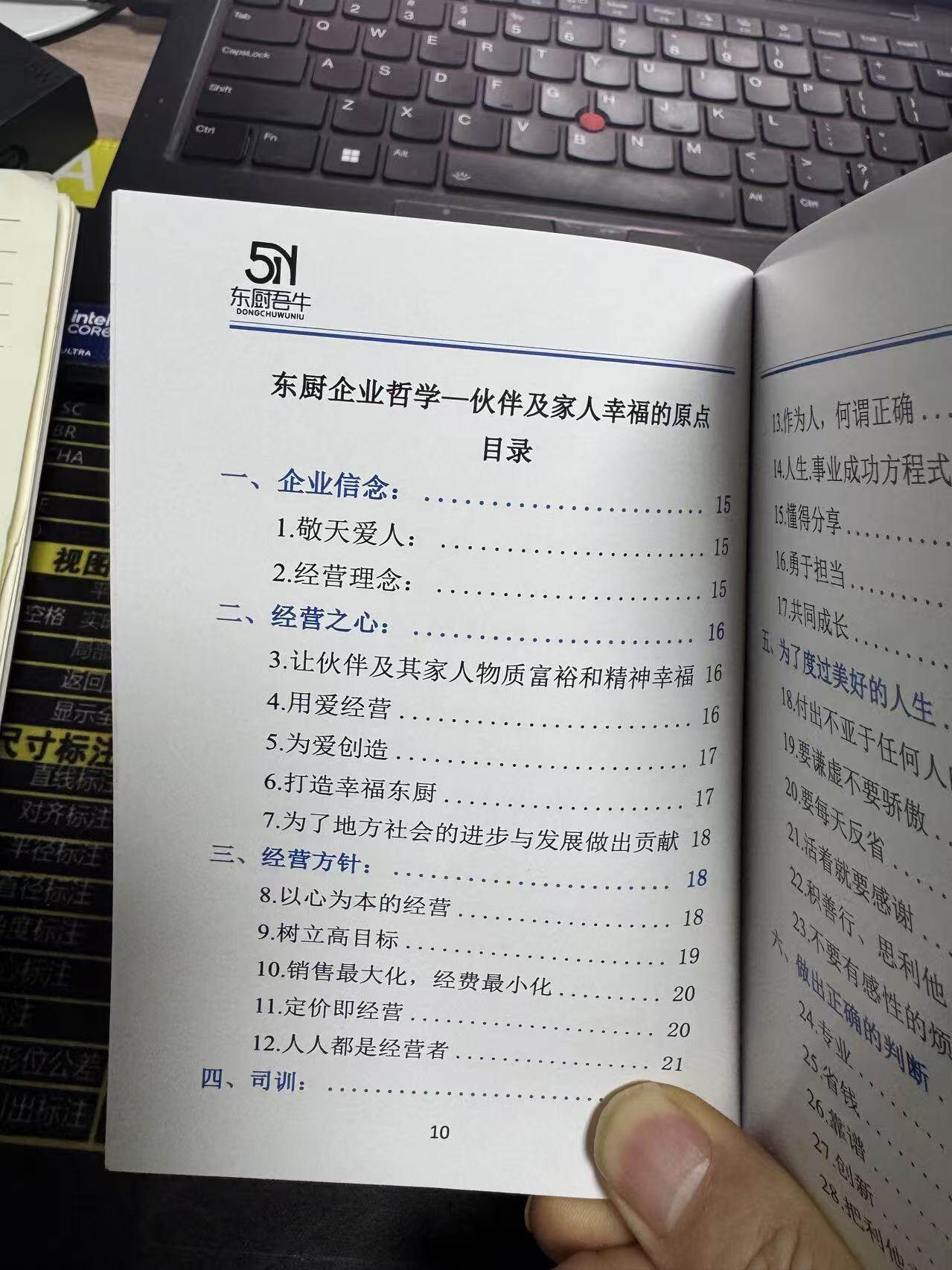
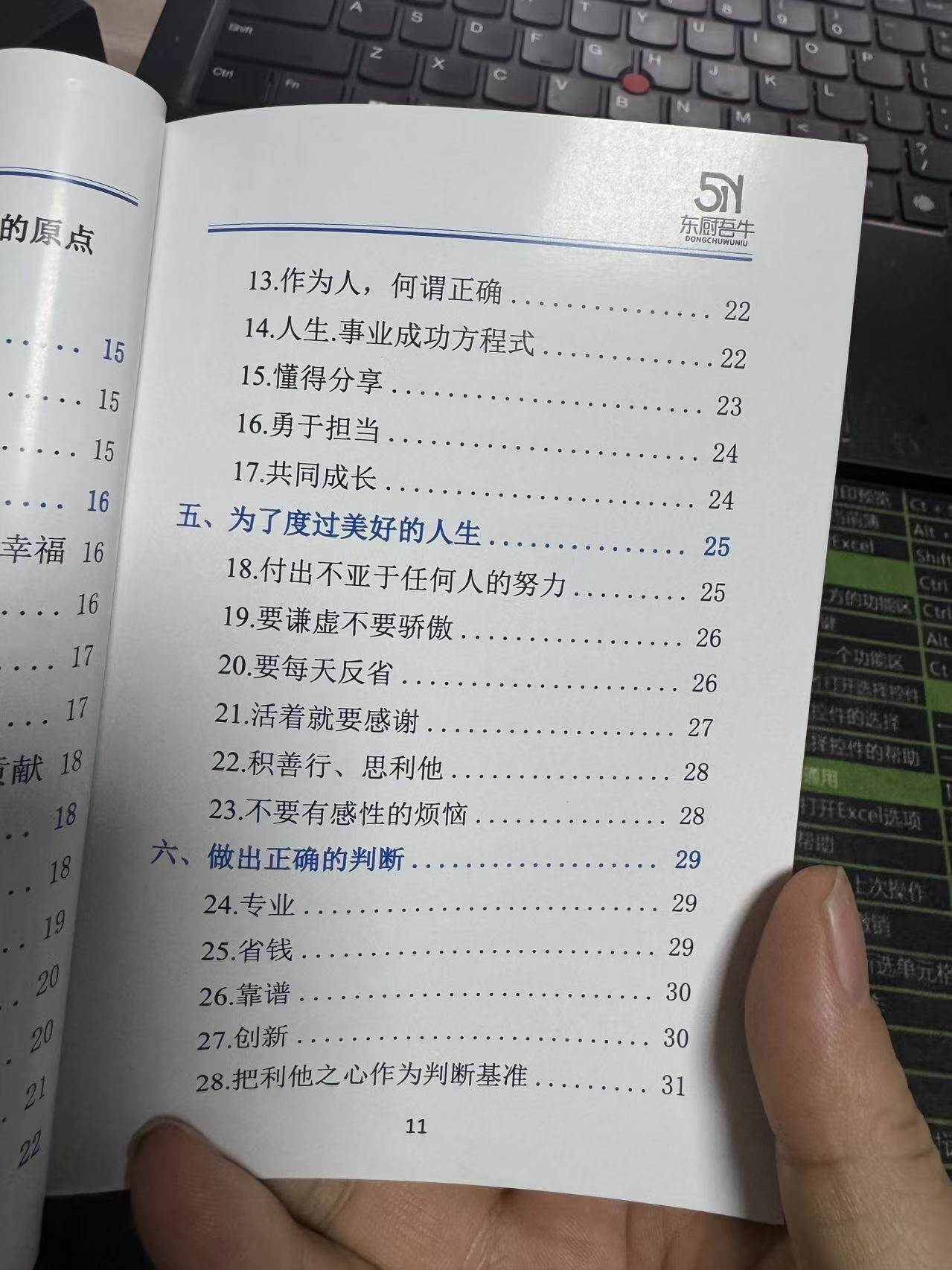
Table of Contents
I. Corporate Beliefs:
1 Reverence for Heaven and Love for People:
2 Business Philosophy:
2. The Mindset of Business:
3 Empower partners and their families with financial prosperity and spiritual well-being
4 Built with love
5 Creating for Love
6 Build a Happy Dongchu
7 Contributes to the progress and development of local communities through corporate actions.
3. Business Strategy:
8 Management Based on the Heart
9 Set ambitious goals
10 Maximize sales, minimize expenses
11 Pricing is management
12 Everyone is an operator
IV. Training:
13 As a human being, what is the right thing to do?
14 The Equation for Success in Life and Business
15 Knows how to share
16 Take Responsibility
17 Grow Together
5. To Live a Fulfilling Life:
18 Put forth effort that surpasses anyone else's
19: Be humble, not arrogant.
20 needs to reflect daily
21 Live with gratitude
22 Do good, think of others
23 Don't dwell on emotional regrets
VI. Make the Right Judgment:
24 Professional
25 Save money
26 Reliable
27 Innovation
28 Use altruism as your decision-making benchmark.
7. Work More Effectively:
29 must continuously engage in creative work.
30 Leads by example; the workplace is sacred.
31 Deep Thinking: Keep thinking until you see the result.
32 Begin with the end in mind
VIII. Everyone is the East Kitchen:
33 Inspire people with a sense of mission
34 Cultivate humanity through philosophy
9. Independent Accounting by Department:
35 Muscle Tone Principle
36 Principle of Perfectionism
37 Follow the one-to-one principle
38 Adhere to the double-confirmation principle
39 Principle of Cost-Benefit Efficiency
40 Daily reconciliation
41 must be managed with numbers
42 Buy the required items in the desired quantities
43 Everyone participates in management
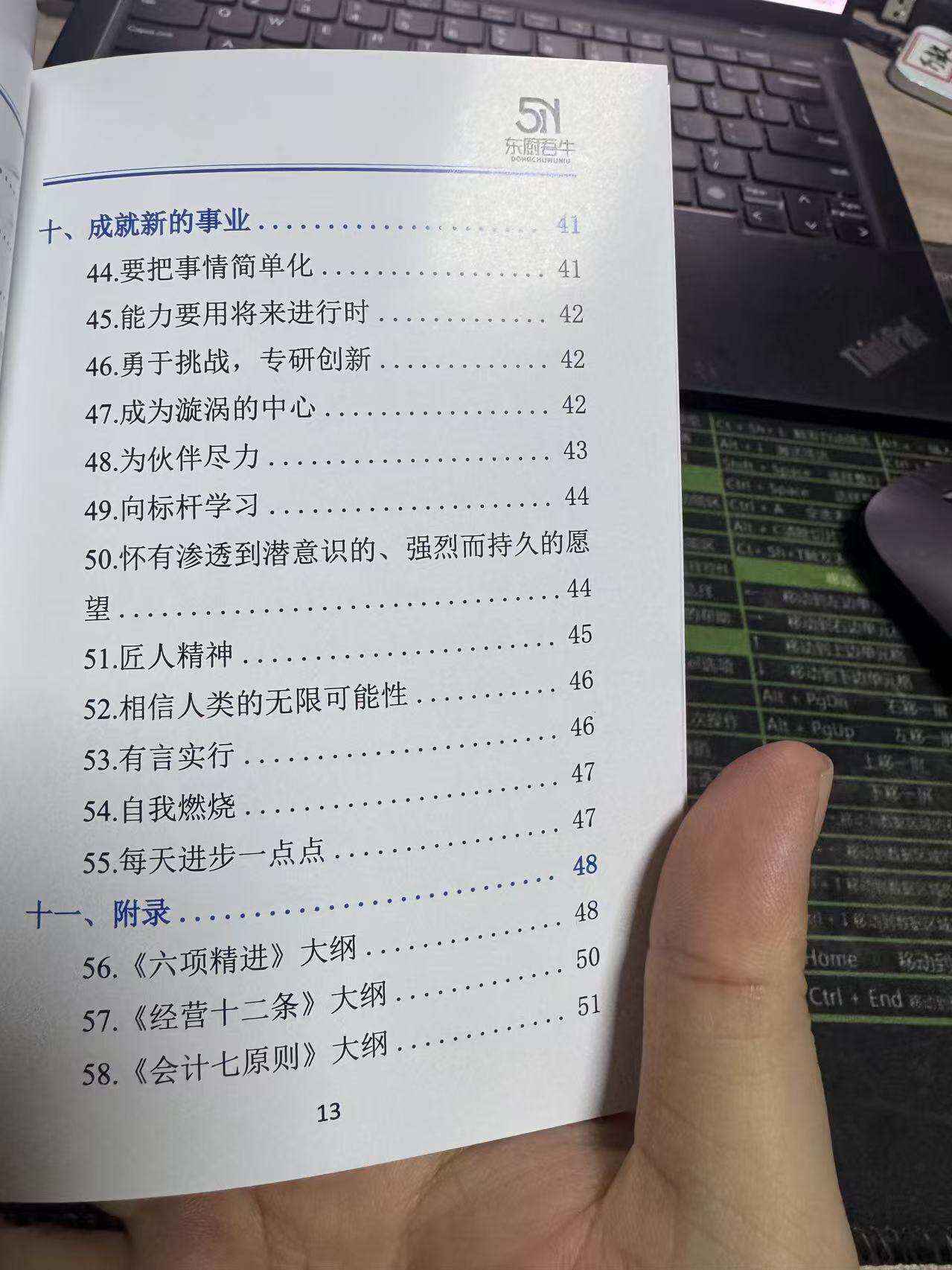
10. Achieve New Ventures:
Simplify things with 44
45 Use the future continuous tense.
46 Dare to challenge, innovate with expertise
47 become the center of the whirlpool
48 strives for partners
Learn from 49
50 harbors a deep, persistent desire that penetrates the subconscious
51 Craftsmanship
52 Believe in the infinite potential of humanity
53 has spoken
54 Self-Combustion
55 A little progress every day
XI. Appendix:
56 Outline of "Six Principles for Advancement"
57 Outline of "The Twelve Management Principles"
58 Outline of "The Seven Principles of Accounting"
Dongchu Enterprise Mission: To enrich our partners' and families' lives materially while nurturing their spiritual well-being. We operate with love, create for the sake of love, build a happy Dongchu, and contribute to our local community through our business activities.
Dongchu Corporate Philosophy: The Foundation of Our Partners' and Family's Happiness
I. Corporate Beliefs:
1 Reverence for Heaven and Love for People:
"Heaven" is reason; "Revering Heaven" means aligning with reason, using the principles of heaven and innate conscience as the standard for judgment. "Loving People" means following human nature, caring for all with a benevolent heart. "Revering Heaven and Loving People" means honoring heavenly principles and caring for humanity.
Dongchu always approaches matters with integrity and humility, steadfastly doing the right things in the right way. We are passionate about our company and country, dedicated to supporting our colleagues, and we work with love and reverence.
2 Business Philosophy:
Empower partners and their families with material prosperity and spiritual well-being. Build a happy Dongchu through love-driven operations and value creation, while contributing to local communities through corporate responsibility.
2. The Mindset of Business:
3 Enable partners and their families to achieve material prosperity and spiritual well-being
Employees are the foundation of any enterprise. One of our core responsibilities is nurturing talent. At Dongchu, we prioritize our people and place their well-being first. We ensure they enjoy material security through stable, generous compensation and comprehensive benefits. Beyond that, we foster professional growth and joy in their daily work, helping them find meaning and fulfillment in both their careers and lives. This inspires passion and dedication, allowing them to recognize the value of their contributions, share love with others, and achieve true spiritual satisfaction.
4 Built with love
Business isn't about selling products; it's about winning hearts. The highest level of commerce is education, and the highest level of education is commerce. This marks a shift from selling products to delivering personalized services that address human nature and customer needs. Products have a lifecycle of just days or years, but people live for at least 60 years. Dongchu is committed to building a community of destiny and life with our partners. This is reflected in: loving care for customers, empowering partners with love, caring for colleagues with compassion, and taking social responsibility with heart.
5 Creating for Love
Creating value outperforms creating products. We're transforming from selling beef to delivering a 10% cost-saving solution for a beef lifestyle. We're building a long-term growth community where co-creation delivers personal value and holistic well-being. We create value for customers, platforms for partners, happiness for associates, and standards for the industry. Through love-driven innovation, Dongchu isn't just selling products—we're crafting a new lifestyle and business ecosystem.
6 Build a Happy Dongchu
The essence of Xingfu Dongchu is elevating traditional corporate organizations into value communities, shifting from profit-centricity to holistic well-being creation. The highest standard of business operation is creating happiness. It transforms employment relationships into family-like bonds, building a community of shared life meaning. This is reflected in partner well-being: dual fulfillment of material and spiritual richness; customer well-being: value experiences beyond transactions, redefining customer relationships by selling happiness experiences rather than products; partner well-being: fostering a growth platform for co-creation and shared benefits; and social well-being: driving industry progress and leading value innovation.
7 to contribute to the progress and development of local communities
Our unwavering dream is to build a great enterprise that brings happiness to our partners, earns the trust of our customers, and fulfills its social responsibilities. Guided by respect for universal principles and compassion for all people, Dongchu embraces its social duties, champions the spirit of our nation and era, and continually strives for excellence. We are committed to supporting the great rejuvenation of the Chinese nation and advancing human progress and development—a responsibility we cannot shirk.
3. Business Strategy:
8 Management Based on the Heart
"Management with the heart at its core" means that all business operations must start from a sincere mindset, prioritizing the well-being of employees and customers. It involves treating them with genuine respect, safeguarding their interests, and fostering mutually beneficial, win-win relationships among the company, its employees, its customers, and society as a whole.
Leadership delivers on expectations through relentless hard work, while employees build mutual trust and unite as one cohesive, powerful team.
Facing social development and industry competition, Dongchu must remain people-centric. Guided by corporate culture, we will continuously unite our team, embrace innovation, and create a bright future.
9 Set ambitious goals
To achieve extraordinary success, businesses must set ambitious goals. Only by embracing lofty aspirations and maintaining a positive outlook can you build a fulfilling and impactful enterprise. Goals should be clear, quantifiable, and broken down into measurable, actionable components. This approach facilitates role clarity, accelerates execution, and empowers employees to unleash their initiative and creativity.
Dongchu's mission is to become a highly profitable, happy, and great enterprise. Striving toward this ambitious goal, our partners continuously work hard to achieve remarkable results and realize their grand dreams.
10 Maximize sales, minimize expenses
A business is a social organization with the goal of generating profit, and its operations must pursue profits transparently. Sales maximization means expanding market share and building more partnerships by strengthening products, setting reasonable pricing strategies, establishing stable sales channels, and fostering harmonious customer relationships. Simultaneously, minimize expenses by implementing cost-reduction measures effectively.
To ensure survival and sustainable growth, Dongchu must adhere to the principle of maximizing sales while minimizing expenses. This is not only critical for the company's viability but also the most effective strategy to transform Dongchu into a high-profit enterprise.
11 Pricing is management
Pricing is management: think carefully about pricing, and manage with relentless precision. Establishing a fair price acceptable to both parties is the starting point; minimizing costs around that price is what management is all about.
Pricing sets the standard for service; service determines price, and price dictates business success. Different service attitudes generate different profits.
Business operators must first accurately understand the value of their products and services, then identify the optimal operating model to maximize profits. Successful management requires every employee's active participation and commitment to personal growth and professional success. Contributing to operations means improving efficiency, delivering excellent service, and practicing frugality in your daily work.
12 Everyone is an operator
To realize the company's grand vision, employees must adopt an entrepreneurial mindset and give their all in their roles—transforming from "bystanders" into active "participants" and even "owners."
While running a business, every individual bears the responsibility of driving growth. We must tap into our sense of ownership and selfless dedication to contribute ideas and solutions for the company's success. How employees think and act defines the corporate culture and determines the company's destiny.
IV. Training:
13 As a human being, what is the right thing to do?
At Dongchu, we use "What is right as a human being" as our guiding principle. Through hands-on experience and the test of time, we continuously cultivate ourselves to become kind-hearted, respectful, loving, and committed to mutual benefit. Our business must align with universal truth. Enabling digital transformation for enterprises is not only our responsibility but also our mission.
14 The Formula for Success in Life and Career
Kazuo Inamori believes that whether an individual or a company can continuously improve depends on the product of three factors: ability, enthusiasm, and mindset.
The results of life and career = Mindset × Enthusiasm × Ability
Ability refers to innate qualifications such as talent, intelligence, physical health, and motor skills. Its range is 0 to 100 points. Passion represents the emotional drive and desire to work on a task—factors developed over time—with a range of 0 to 100 points. Thinking style encompasses one's mindset, mental state, and value preferences toward work, ranging from -100 to +100 points. The level of achievement an individual can reach in a given endeavor depends on the product of these three factors.
Therefore, even with strong capabilities, lacking enthusiasm yields poor results. Conversely, acknowledging one's limitations but approaching life and work with burning passion can ultimately lead to success. However, more important than ability or passion is mindset. A positive mindset includes: always moving forward constructively; being grateful and collaborative; accepting challenges optimistically; acting with kindness, ideals, and alignment; working tirelessly; and remaining content, selfless, and free of greed.
15 Knows how to share
Sharing is a mindset. Share while learning, learn while sharing. Encouraging employees to exchange ideas at work helps them leverage each other's strengths and grow. We believe in human potential; through learning and sharing, our capabilities will surely improve.
Dongchu cares for its employees and their growth. Believing that sharing is the ultimate act of altruism, we strive to create every opportunity for learning and sharing: "I share! I am happy! I grow!"
"Share" embodies trust, collaboration, and experience. "Joy is better shared." Sharing reflects generosity, brings happiness, and offers a gift. It transforms "you" and "me" into "us," turning private enjoyment into collective benefit.
East Kitchen staff should be good at sharing, willing to share, and diligent in sharing. Improve efficiency through sharing and enjoy the fruits of success together!
16 Take Responsibility
"Responsibility" is a duty and an excellent quality. Embracing responsibility reflects a strong sense of accountability and commitment to the team's success. To do so, you must let go of "employee" or "bystander" mindsets. Cultivate urgency, awareness of challenges, and a sense of duty. Continuously update your mindset, proactively improve your behaviors and work methods, and confidently take on your roles and mission.
17 Grow Together
"Growing up" refers to the process of evolving from small to large, from weak to strong, and from immature to mature. Growing together involves mutual respect, equality, win-win cooperation, and shared development.
As a Dongchu employee, uphold the right values by integrating personal growth with the company's development. Encourage and share with one another, align on goals, and co-create value to achieve collective progress. Dongchu will move in sync with the nation, stay aligned with the industry, and drive mutual success with customers—contributing to a harmonious and healthy dining environment.
5. To Live a Fulfilling Life:
18 Put forth effort that surpasses anyone else's
To live a more fulfilling life, you must work harder and dedicate yourself fully to your job. Just as plants and animals in nature strive for survival, so too should we.
Strive with effort that surpasses all others. First, improve daily and learn to love your work; second, find joy in your tasks; third, persist relentlessly. Every endeavor requires a sustained process—stay grounded, keep working hard, and never give up. When you are deeply passionate about your work and dedicate extraordinary effort, you will achieve remarkable results.
19: Be humble, not arrogant.
"Vanity invites ruin; humility brings reward." Pride leads to self-destruction. No matter how far you've succeeded, you are still but a speck in this vast world. Every peak is followed by a valley. The humble never stop growing. Regardless of your position, stay modest and diligent. Do your best, maintain your drive, evaluate yourself honestly, and strive for continuous progress without arrogance or complacency.
20 needs to reflect daily
In our busy daily lives, it's easy to lose ourselves. Therefore, we must consciously cultivate the habit of self-reflection. This allows us to correct our flaws and mistakes, return to our true selves, and grow.
Consistent self-reflection prevents major mistakes. To improve yourself, you must hold yourself to high standards and regularly engage in deep introspection: "Do my daily judgments and actions align with sound ethical principles? Am I harboring any pride?"
Every reflection brings new insights, helping you rediscover yourself, grow, and create meaningful change.
21 Live with gratitude
No one can survive alone. Everyone relies not only on nature's gifts—air, water, and food—but also on the support of family, colleagues, and society. A company thrives thanks to two things: the collective effort of all employees and the trust of our customers. We must adopt this humble mindset and view everyone who helps us as worthy of gratitude. By consistently holding a grateful heart, we can experience happiness, enrich our lives, and move forward more smoothly. Through relentless effort, we repay our families, our companies, and our society. Only by striving and working hard can we achieve success in life. When we attain success or luck, we should remain sincerely grateful, continue to work diligently, and ensure that our success endures.
Dongchu Ren upholds a spirit of gratitude and giving back: for the protection of heaven and nature; for our parents' nurturing; for the nation's education; for our teachers' guidance; for our colleagues' support; for our community's hard work; for our family's trust; and for everyone who has contributed.
22 Do good, think of others
Those who willingly serve as stepping stones earn the most love and respect; those who embody selflessness like heaven and earth achieve true fulfillment. "Setting sail with an altruistic heart invites a wind of mutual benefit." Only by genuinely placing others in your heart and offering heartfelt help will you receive sincere reciprocity. Helping others is one of life's greatest joys.
The Dongchu team should always cultivate an altruistic mindset and take actions that benefit others, enabling customers to grow stronger through their connection with Dongchu.
23 Don't dwell on emotional regrets
Do not yield to suffering or flinch from pain. Life is inherently turbulent; we will inevitably face hardships and challenges. Yet, we must never be defeated by them, nor should we escape. Stand firm with determination, stay true to your original purpose, and diligently do what needs to be done. This builds our resilience and elevates our character.
VI. Make the Right Judgment:
24 Professional
In the Dongchu Beef system, professionalism is a dynamic evolution. It goes beyond accumulating knowledge and skills; it embodies a life philosophy and business mindset. Through systematic training paths and rigorous practice standards, professionalism ultimately unifies personal growth, enterprise development, and social value.
25 Save money
Dongchu Beef delivers direct economic savings to consumers, offering at least 10% in cost reduction. It provides additional value by rewarding extra benefits through purchase behavior. On a deeper level of savings, Dongchu Beef redefines the concept of saving by transforming consumption into investment. This shifts the consumer's role from buyer to partner, establishing a comprehensive value delivery system that goes beyond the product itself.
26 Reliable
Reliability at Dongchu Beef is a multi-dimensional, systematic concept woven into every aspect of our business philosophy, product quality, service delivery, and organizational culture. It reflects: - Guaranteed product quality - A robust operational framework - Comprehensive support for partners - Firm commitments in customer service - A strong cultural foundation - A vision for sustainable long-term growth - Trusted digital transformation in the information age This reliability goes beyond current product and service excellence—it embodies our commitment to the future and our ability to continuously evolve.
27 Innovation
Dongchu Beef's innovation philosophy is a multi-dimensional, systematic concept that permeates every aspect of its business model, technology application, value creation, and organizational culture, forming a unique innovation ecosystem. Business Model Innovation: Transitioning from selling products to selling insights. Technological Innovation: End-to-end process upgrades, advancements in food processing technology, and digital empowerment initiatives. Value Creation Innovation: A multi-faceted value delivery framework. Organizational Model Innovation: Building a partner-driven ecosystem. Marketing & Promotion Innovation: Developing a content-centric ecosystem. Pathway Breakthrough Innovation: Breaking free from traditional dependencies. Educational Business Innovation: A fundamental shift in core philosophy.
28 Use altruism as your decision-making benchmark.
In everyone's heart, there is both a self-centered desire to "do what benefits me" and an altruistic impulse to "help others even at personal cost." Judging solely by self-interest limits your perspective to personal gain and loss, making it impossible to earn others' support. Moreover, focusing only on oneself narrows your vision, leading to poor decisions.
Instead, make decisions with an altruistic mindset. Because you act for others' benefit, you earn their support. Additionally, your broadened perspective enables you to make correct judgments.
To do better work, when making decisions, you must look beyond yourself and consider others with a mindset of altruism.
7. Work More Effectively:
29 must continuously engage in creative work.
Work diligently while reflecting daily: "Is this sufficient?" Continuously improve. Never mindlessly repeat yesterday's tasks. In every day's work, ask, "Is there a better way?" Approach each task with curiosity—"Why?"—striving for progress today over yesterday, and tomorrow over today. For your assigned duties, constantly seek ways to refine and innovate. This persistent inquiry fosters creativity. Through such iterative improvement, significant breakthroughs emerge. Lead by example; the spirit of excellence resides in the workplace.
30 Leads by example; the workplace is sacred.
To earn the support of your team and colleagues, you must lead by example. Even if a task is disliked by others, step up first and tackle it with a proactive attitude. No amount of eloquent words will win people over if you don't lead by action. To get others to act, you must be the first to move—demonstrate commitment through your actions so others will follow. Leading by example requires courage and conviction, but consistent practice will help you grow. This principle applies not just to leaders, but to everyone in the company; we must all foster a culture of leading by example. The origin of manufacturing is the production floor; the origin of sales is direct customer interaction. When problems arise, always return to the source—the front line. Struggling at your desk with empty theories won't solve anything. As the saying goes, "The front line is a treasure trove." It holds firsthand information that is key to solving problems. Regularly visiting the front line not only helps uncover solutions but also sparks unexpected insights that can boost productivity, improve product quality, or generate new customer orders.
31 Deep Thinking: Keep thinking until you see the result.
To succeed in our work, we must achieve a mental state of "seeing the result." Initially, this begins as a dream or aspiration. Through careful and repeated mental simulation—asking, "What if I do it this way? What if I do it that way?"—the boundary between dream and reality gradually dissolves. We begin to feel as though we have already accomplished tasks we haven't yet started, fostering a deep confidence that success is inevitable. This is what it means to "see the result." Only by thinking so deeply that we reach this state can we accomplish groundbreaking ventures, create something entirely new, or overcome extreme challenges that block all others.
32 Begin with the end in mind
Strategic "Start with the End in Mind": Long-term development planning. Operational practice: Start with the end in mind to build a goal-driven operating system. Personal growth: Start with the end in mind and cultivate yourself using the Dongchu Five-Level Four-Stage Craftsman Spirit framework. Innovation breakthroughs: Start with the end in mind, guided by a future perspective. Organizational development: Start with the end in mind to establish a robust sustainable development mechanism. Value creation: Start with the end in mind for comprehensive value delivery.
VIII. Everyone is the East Kitchen:
33 Inspire people with a sense of mission
Dongchu is a company driven by noble principles and a lofty mission. We are committed to achieving the material and spiritual well-being of our employees while contributing to social progress. With unwavering determination and belief, we seek like-minded individuals to join us in realizing personal value through the pursuit of great achievements.
34 Cultivate humanity through philosophy
"Philosophy" means doing the right thing, the right way. Dongchu has always been committed to cultivating culture and using it to drive enterprise growth. We firmly believe that corporate culture is key to employee development and organizational success. Dongchu people must uphold and strengthen our cultural DNA: diligence, humility, self-reflection, gratitude, altruism, optimism, and filial piety—continuously refining and evolving our business philosophy through practice.
East Kitchen personnel must deeply align with the company's business philosophy. By integrating this philosophy into processes, behaviors, habits, and core values, they elevate their character and build a fulfilling life.
9. Independent Accounting by Department:
35 Muscle Tone Principle
A healthy body requires strong muscles and vitality. If we view an enterprise as a human body, long-term sustainable growth demands solid strength without excess weight. The "excess weight" of a company refers to non-performing assets; effectively managing and disposing of them is akin to shedding fat and building muscle. To become a "lean and muscular" enterprise like Dongchu, the organization must adhere to the following principles: frugality, sound accounting practices, vigilance against rising fixed costs, budget discipline with just-in-time purchasing, and risk management free from speculation.
36 The Principle of Perfectionism in Management
Perfectionism means allowing no ambiguity or compromise. Every task must strive for perfection, with this mindset permeating every detail. This is the fundamental attitude to adopt in business operations.
Leaders must be able to make accurate, flawless business decisions at all times. Perfectionism should permeate the entire organization and become a habit for everyone.
37 Follow the one-to-one principle
Business operations inevitably involve the flow of funds and goods. In such cases, it is essential to ensure a one-to-one correspondence between funds, goods, and supporting documents. This principle is known as the "One-to-One Correspondence Principle."
The "One-to-One Principle" places a company's operations under fully transparent management. No one may falsify figures, and no documents or goods can move independently. Every step in the workflow must be reviewed and supervised, with every node strictly enforced. When everyone fully adheres to the One-to-One Principle, it eliminates fraud within the organization, raises ethical standards, and strengthens employees' trust in the company.
38 Adhere to the double-confirmation principle
The Two-Person Verification Principle requires that critical workflows be reviewed and confirmed by two or more individuals or departments to ensure accuracy. This practice reduces errors and fosters a rigorous approach to work, even for seemingly simple tasks where carelessness can lead to oversights. Every department and process within the company must fully implement this principle, which embodies our commitment to integrity and excellence.
39 Principle of Cost-Benefit Efficiency
It's not just for business leaders to enhance accounting awareness; every employee must cultivate it daily. Accounting awareness is essentially cost consciousness—approaching all tasks with a focus on minimizing costs. To boost company profitability, we need to increase revenue and reduce expenses in our everyday work.
Strengthening cost awareness goes beyond saving money; it requires adopting an owner's mindset. We must evaluate issues from the company's perspective, constantly asking how to increase revenue, reduce costs and expenses, and minimize time—all to boost efficiency.
Only when every employee possesses the accounting mindset required for operations does each person become an operator. This boosts the company's economic performance, which in turn raises our individual returns, transforming the enterprise into a vibrant organization.
40 Daily reconciliation
When running a business, you cannot rely solely on end-of-month accounting reports. These monthly statements are simply the accumulation of small figures derived from daily sales and expenses. We must recognize that a month's results are the sum of daily performance. In operations, ignoring daily numbers is like flying a plane without checking the instruments—you won't know your destination or where you'll land. Similarly, without tracking daily operational metrics, you cannot achieve your business goals. Never forget: accounting reports reflect the cumulative work of every individual, every single day.
41 must be managed with numbers
In business, data is everything. To make sound business decisions, leaders must master financial data and how to process it. To be a true operator, you must know how to calculate and understand accounting.
Digital management begins with "accurate numbers." Financial data must be flawless. Every department must embrace a digital mindset, and leaders must uphold perfectionism by rigorously auditing financial records to eliminate all errors. Second, ensure "transparent numbers." Financial reporting must be honest and above board. Adhere strictly to the one-to-one correspondence principle and implement a dual-confirmation system to achieve glass-like transparency in operations. Finally, practice "digital control." Clearly define goals using specific numbers. Even the smallest units must have explicit numerical targets. Once set, these targets must be achieved at all costs.
42 Buy the required items in the desired quantities
When purchasing items and raw materials, buying in bulk can lower the unit price. However, it is unwise to purchase more than needed or beyond your sales capacity. Overbuying leads to waste in usage. Even if purchased at a low price, additional costs arise from warehousing and inventory carrying charges. Moreover, since we operate in the food industry, all products have expiration dates. Unsold items that miss their peak selling period must be discounted, sold at a loss, or written off as obsolete stock—a significant risk. In short, Dongchu should only procure what is necessary, in the necessary quantities.
43 Everyone participates in management
Employee participation in management fosters independence, strengthens execution and critical thinking, and builds a sense of responsibility. By sharing insights, employees contribute strategic ideas to business planning and analysis. Through active involvement, each individual realizes their value and advances toward our shared vision.
10. Achieve New Ventures:
Simplify things with 44
We often tend to overcomplicate things. However, to grasp the essence of any matter, it is essential to simplify complex phenomena. The simpler we view a situation, the closer we get to its true nature—and ultimately, to the truth. Prioritizing simplification in our thinking is crucial. When faced with complexity, we can apply strategies or leverage resources to make things simpler.
45 Use the future continuous tense.
When setting new goals, dare to aim beyond your current capabilities. A goal that seems unachievable today will be achievable at a future point. To set such a target, you must also plan how to upgrade your existing skills.
Anyone can declare whether a task is feasible or not based on current capabilities. However, without improving those capabilities, you cannot complete new work or achieve higher goals.
It may not be possible right now, but we must achieve it no matter what. Only this mindset will enable us to reach high goals.
46 Dare to challenge, innovate with expertise
A challenge means setting ambitious goals, rejecting the status quo, and continuously creating something new. To take on a challenge, you must have the courage to confront difficulties head-on, the endurance to endure any hardship, and the determination to work harder than anyone else.
47 become the center of the whirlpool
To drive company or team progress effectively, every initiative requires a dynamic, central figure. This person acts as the focal point—like an updraft rising from the ground—that draws everyone in and mobilizes the entire organization. These are individuals who proactively lead, inspire others, and energize their work. They are "leaders at the center of the vortex." Only those with a strong sense of mission can become such leaders and serve as the core of their team or organization.
Work requires collaboration with superiors, subordinates, and colleagues. Take initiative in assuming responsibility and mobilize the team to work together toward common goals.
48 strives for partners
In human behavior, people often prioritize their own interests. In the East Kitchen, selfless actions like "doing our best for partners" are admirable and essential. Acting for the benefit of society, the world, and partners stems from a noble heart. Doing our best for partners means working with an altruistic mindset; as long as we treat people and matters around us with care, it is an act of altruism. We must possess the spirit of sacrifice to serve partners and colleagues. Only by generously helping others can we cultivate high character and build a more excellent team.
Learn from 49
Benchmarking means comparing your products, production processes, and services against exemplary companies—both within and outside your industry—to identify gaps. By reflecting on these comparisons and summarizing key insights, you gain a clear understanding of your current position and precise positioning. Learn from others' best practices, address your shortcomings, use outstanding peers as role models, and continuously improve to boost your competitiveness.
50 harbors a deep, persistent desire that penetrates the subconscious
To achieve high goals, you must first harbor a strong and persistent desire to make them happen.
When a desire is pure and intense—constantly in your thoughts, deeply contemplated, repeatedly revisited, and never forgotten—it penetrates the subconscious. Once in this state, it operates differently from conscious rational thinking. Even during sleep, the subconscious remains active, unleashing powerful force to propel your desire toward reality.
51 Craftsmanship
Craftsmanship is the spirit of unwavering dedication to work, meticulous attention to detail in both tasks and products, and strict adherence to high standards. It is a form of self-cultivation: we must love what we do, approach our profession with reverence, remain focused and professional, and constantly strive for excellence. Craftsmanship ignites our inner potential, embodies an inspiring core value, and sets a moral example of pride and commitment in one's work.
Love your work and strive for excellence, achieving true mastery. Seamlessly integrate your personal values with the company's growth by dedicating your time and energy to our business. Deliver "concierge-style" service and products to customers through dedication, expertise, and focus.
52 Believe in the infinite potential of humanity
We believe in future potential: human capability is limitless, so do not set your own boundaries. Through persistent effort, you can expand your abilities indefinitely. If you judge feasibility based only on current skills, you will never challenge new frontiers or accomplish new tasks.
When you aim to achieve something, first believe that human potential is limitless. With an unwavering desire to succeed no matter what, summon your courage to take on the challenge, and persistently put in the effort until you succeed.
53 has spoken
"Say it, then do it." State your ideas and goals in words. Declaring them aloud takes immense courage, but once you do, the pressure from others and yourself will spur you on, forcing you into a position where success is inevitable. What you say becomes a commitment, and with that comes the responsibility to deliver—so you must follow through.
When taking action, make a public commitment to yourself. Proactively initiate challenges, accept them, push yourself to the brink of your limits, give it your all, unlock your potential, and achieve your goals.
54 Self-Combustion
Just as materials are classified into spontaneous combustibles, flammables, and non-flammables, people can also be categorized into three types: those who burn when ignited (flammable), those who don't burn even when ignited (non-flammable), and those who ignite themselves without an external spark (spontaneously combustible).
To achieve great things, you must become someone who burns with passion. The best way to do this is to love your work. When you truly care about what you do, you'll give it your all, find no task too difficult, grow even more passionate, and deliver outstanding results. To ignite that inner fire, besides loving your work, you also need a clear goal.
55 A little progress every day
People often say that small daily progress brings success within reach. Though it seems simple, it requires strong willpower and an understanding of how important those small steps are.
1365=1
1.01365=37.8
0.99365=0.03
This formula perfectly captures the essence: building on "1", make a small improvement every day. Consistency leads to transformation. Daily progress matters most—it's about sustainability. Keep improving day after day, week after week, month after month, year after year. Each phase becomes rich and meaningful, like climbing each step of life's staircase. Small achievements accumulate continuously, driving endless growth. This allows you to constantly elevate yourself and refine your craft at work. With this approach, even the grandest goals become achievable.
XI. Appendix:
56 Outline of "Six Principles for Advancement"
1. Make efforts that exceed anyone else's.
Dedicate yourself to deep study and work harder than anyone else. Persist relentlessly, continuously refine your craft, and strive for excellence. Instead of wasting time complaining, take even the smallest step forward—move upward by an inch.
2. Be humble, not proud.
"Modesty brings benefit." In Chinese wisdom, a humble heart invites happiness and elevates character. Arrogance breeds dislike, leading to complacency and failure. Talent is a gift from heaven; using it for the public good is primary, while using it for personal gain is secondary. This is the essence of humility.
Aoting Wealth Accumulation
3. Reflect on yourself daily.
Daily review your thoughts and actions: focus your mind, look inward, and ask yourself if you are being selfish or cowardly. Calm your wavering heart, reflect sincerely, and correct any mistakes immediately.
4. Live and be grateful
Never forget kindness received. Simply being alive is a blessing. Gratitude, like groundwater, nourishes the foundation of my moral compass. As long as I live, I will remain grateful.
5. Do good deeds, think of others.
A family that does good will be blessed with lasting fortune. Treat others with kindness, showing care in your words and actions. True goodness lies in genuinely acting for the well-being of others.
6. Do not dwell on emotional regrets.
Don't worry, don't stress, and stop holding grudges. Life is full of ups and downs; hardships and setbacks are inevitable. Never let them defeat you or push you to run away. Face them head-on, hold your ground, stay true to your original goal, and do what needs to be done.
57 Outline of "The Twelve Management Principles"
1. Define the purpose and meaning of your business. Establish a lofty goal that is upright, morally justified, and noble.
2. Set specific goals and share them with employees.
3. Cultivate a powerful, persistent desire that permeates your subconscious.
4. Work harder than anyone else. Progress step by step, build a solid foundation, and persistently excel in your specific tasks.
5 Maximize sales, minimize expenses. Profit follows naturally when you live within your means.
6. Pricing is management. Setting prices is a leader's responsibility; the price should be set at the intersection where customers are willing to pay and the company remains profitable.
7. Business depends on strong willpower. It requires a will as unyielding as rock.
8. Burning Spirit. Business requires a fighting spirit as intense as any martial arts match.
9. Act with courage. Never show cowardice.
10. Engage in creative work. Make tomorrow better than today, and the day after better than tomorrow. Continuously refine, improve, and pursue excellence.
11. Act with care and honesty. Business is a two-way street; when all parties benefit, everyone wins.
12. Maintain a positive and optimistic attitude, hold onto your dreams and hopes, and live with sincerity.
58 Outline of "The Seven Principles of Accounting"
1. Cash Flow Operating Principles
Pursue the essence of accounting in business operations by judging with "As a human, what is right?" Focus on cash flow and do your utmost to eliminate the gap between accounting profit and actual cash. Return to the origin of accounting by prioritizing "cash," and establish a "reservoir-style" management model. At its core, business management is about immediate response—operating with realism and integrity.
2. Principle of one-to-one correspondence
Ensure a one-to-one match between money, goods, and invoices throughout all business operations. From senior leadership to every employee, adherence to this principle prevents fraud, elevates the company's ethical standards, and strengthens employee trust.
3. Principles of Solid Muscle Management
A company must be lean and strong, free of excess. Overcome vanity, cut back on overinvestment, and adopt a buy-as-you-need approach. Treat non-performing assets as immediate losses. Only profits earned through honest effort and hard work—not speculation—are real profits.
4. The principle of perfectionism
To achieve 100% of business targets, leaders must start from the front lines: grasp both macro and micro perspectives. Rigorously verify progress, accuracy, and all relevant materials across every stage to pursue perfection. Embed this principle throughout the company until it becomes everyone's habit.
5. Principle of double confirmation
Enable mutual review and confirmation among two or more people and departments to detect and prevent errors, ensure healthy organizational operations, eliminate opportunities for mistakes, foster a workplace that values its people, and successfully manage the business on a higher level of love and altruism.
6. Principles for Improving Accounting Efficiency
The core mission of corporate accounting is to help businesses improve economic efficiency and pursue added value. It embeds unit-time productivity into every employee's mindset, enabling the creation of high-value products that break through conventional limits. The goal is to maximize sales, minimize expenses, and sustainably generate high profits.
7. The Principle of Transparent Operations
Business operations require all employees to understand the company's goals and the specific measures to achieve them. By making comprehensive, real-time information about the company's actual status transparent and accessible, everyone can address challenges promptly and effectively, establishing a glass-like transparent management system.
Want more product info?
Browse our online store for professional beef supply chain services